


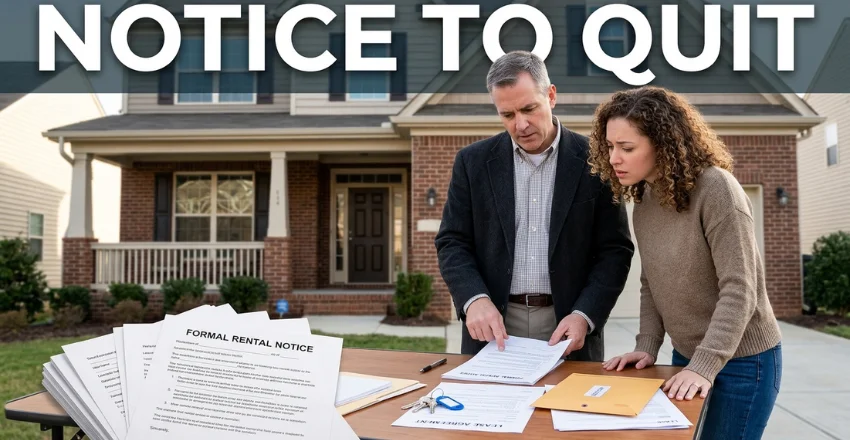
Receiving a notice to quit can feel urgent, but it is usually not the same as a court-ordered eviction. In many states, the document starts a legal process or demands action before a landlord can file in court. Your deadline, options, and defenses depend on state law, local rules, and the reason listed.
Direct answer: A landlord’s written termination or demand notice usually gives a renter a deadline to pay, fix a lease problem, or move. The document itself normally does not remove the renter from the home. If the dispute continues, the landlord generally must use the court process required by state law.
| Key question | General U.S. answer |
|---|---|
| Is the notice an eviction? | Usually no. It often comes before an eviction lawsuit. |
| Why is it sent? | Unpaid rent, lease violations, tenancy termination, or another legally permitted reason. |
| How much time do tenants get? | The deadline depends on state law, tenancy type, and the reason. |
| Can some problems be fixed? | Yes. Some notices allow payment or correction before the deadline. |
| Can a landlord change the locks immediately? | Generally not without following the required legal eviction process. |
| What should a tenant do first? | Read the notice, check local law, save records, and respond promptly. |
Key Takeaways
- A termination notice usually comes before an eviction lawsuit, not after one.
- Deadlines vary widely across states and sometimes across cities.
- Pay-or-quit notices commonly involve overdue rent.
- Cure-or-quit notices usually concern lease violations that can be corrected.
- An unconditional termination notice may provide no opportunity to fix the stated problem.
- Tenants should keep the document, envelope, payment records, lease, and communications with the landlord.
- Court papers require immediate attention because court deadlines differ from notice deadlines.
What Does a Notice to Quit Mean?
The document generally tells a tenant that the landlord wants the tenancy ended or a specific problem corrected. It normally identifies a deadline and may explain what action can prevent further proceedings. Cornell’s landlord-tenant definition explains that state statutes control important details.
The exact purpose depends on the type of notice and the law governing the rental. Some documents demand overdue rent, while others address lease violations or termination of a periodic tenancy. A tenant should therefore read the reason, deadline, and instructions rather than relying only on the document’s heading.
Is the Notice the Same as an Eviction?
A notice and a court-ordered eviction are different stages. The first document generally communicates the landlord’s demand or intention to end the tenancy. A legal eviction usually requires additional court proceedings when the tenant does not leave or resolve the issue.
Massachusetts, for example, explicitly tells renters that its termination notice starts the eviction process but does not force them out. Only a court order can legally require removal. Other states use different names and timelines, so local verification is essential.
This distinction also affects rental records. A private landlord notice is not the same event as an eviction lawsuit filed with a court. Once litigation begins, the filing can create additional housing, financial, and screening concerns.
Common Types of Eviction Notices
Landlord-tenant terminology differs across the country, so the same problem may appear under several document names. The substance matters more than the label printed at the top. These are several common patterns renters may encounter.
| Notice type | Typical reason | What the tenant may be asked to do |
|---|---|---|
| Pay rent or quit | Past-due rent | Pay the required amount or move |
| Cure or quit | Correctable lease violation | Fix the violation or move |
| Unconditional quit | Serious or repeated violation | Move without a cure option |
| Termination notice | Ending a periodic tenancy | Leave by the lawful termination date |
| Notice to vacate | Varies by state | Move, cure a problem, or prepare for termination |
California’s court system shows how detailed these categories can become. Its guidance distinguishes payment notices, correctable lease violations, serious violations, and longer tenancy-termination notices. Those California deadlines should not automatically apply in another state.
How Long Do You Have to Respond?

No single nationwide deadline applies to residential renters. State law can change the period based on nonpayment, lease violations, tenancy length, or another legal ground. Local ordinances may add protections beyond the state minimum.
The way days are counted can also matter. Certain jurisdictions exclude weekends or court holidays for particular notices, while others use calendar days. Never assume that “three days” or “30 days” works the same everywhere.
Renters should check the law where the property is located. NewsPrier’s guide to landlord rent increases also illustrates why rental rules can depend on state and local requirements. A lease may contain additional terms, although lease language cannot override mandatory tenant protections.
What to Do After Receiving the Notice
Acting quickly gives you more time to understand the issue and preserve key evidence. Do not discard the document after reading it once. Keep the original together with anything showing when and how you received it.
- Read every page. Identify the stated reason, amount claimed, deadline, and required action.
- Check your lease. Compare the landlord’s claim with the relevant rental terms.
- Verify local law. Use your state court, attorney general, housing agency, or legal-aid website.
- Save evidence. Keep receipts, bank records, photographs, texts, emails, and maintenance requests.
- Respond in writing. Keep communication clear and preserve copies of anything you send.
- Seek rental assistance if needed. Help may exist for tenants facing temporary financial problems.
- Get legal help when the facts are disputed. This matters especially after court papers arrive.
The Consumer Financial Protection Bureau recommends contacting the landlord before an eviction lawsuit is filed. A repayment arrangement may resolve some nonpayment disputes before litigation begins. Its eviction assistance guidance also directs renters toward state and local resources.
What Happens After the Deadline Expires?
Missing the deadline does not normally let the landlord personally remove a residential tenant on the spot. The landlord may instead become eligible to file the appropriate possession or eviction case. The court process then follows the procedures required in that jurisdiction.
The tenant may receive a summons, complaint, petition, or similar court papers. Those documents carry separate response dates and hearing information. Ignoring them can increase the risk of a default judgment.
The parties may still resolve the dispute after filing. Payment agreements, settlement, mediation, or voluntary move-out arrangements can sometimes prevent a final eviction judgment. Available options depend on the landlord, the claim, and local law.
When a Notice May Need Closer Legal Review
Not every landlord notice is automatically valid. State law may control its contents, timing, delivery method, and the reason supporting termination. A mistake in one of those areas can matter during an eviction case.
Warning signs worth checking include:
- The claimed rent amount appears incorrect.
- The deadline conflicts with state or local rules.
- Required information is missing.
- The notice describes a violation that did not happen.
- The landlord used an improper delivery method.
- The action may involve unlawful discrimination or retaliation.
- The landlord has already changed locks or interrupted essential services.
NewsPrier’s Law section covers other legal topics where procedures and jurisdiction affect a person’s rights. The same principle applies strongly to landlord-tenant disputes. A rule from another state should never replace the law governing your rental.
Can a Landlord Change the Locks or Shut Off Utilities?
Landlords generally cannot bypass required eviction procedures by forcing residential tenants out themselves. Changing locks, removing belongings, or shutting off utilities can create serious legal problems. The exact remedies available to the tenant still depend on state law.
The CFPB states that landlords cannot force tenants out by changing locks without a court order. Its guidance also addresses unlawful charges, essential repairs, utilities, discrimination, and federal protections. Renters facing those problems should preserve evidence and seek local legal help.
Emergency circumstances deserve quick attention. A local legal-aid office, tenant organization, or licensed landlord-tenant attorney can explain available remedies. Police or emergency services may also be appropriate when personal safety is threatened.
Frequently Asked Questions
Can I Ignore a Notice to Quit?
Ignoring it can make the situation harder to resolve. The deadline may determine when the landlord can take the next legal step. Read the document immediately and check the rules where the property is located.
Does Receiving an Eviction Notice Mean I Must Move Immediately?
Usually not based on the private notice alone. The document may instead create a deadline to pay, correct a violation, or leave voluntarily. A landlord generally needs the required court process before physically removing a residential tenant.
Can Paying Past-Due Rent Stop the Process?
Sometimes, depending on the notice type and state law. A pay-or-quit document may give a tenant a defined opportunity to pay. Get a receipt and keep proof of every payment or attempted payment.
What If the Landlord Is Wrong About the Lease Violation?
Collect records showing what happened. Photographs, emails, repair requests, witnesses, or payment records may become useful evidence. Avoid altering or destroying documents connected with the disagreement.
Where Can I Find the Rule for My State?
Start with an official state court, attorney general, or housing agency website. Local legal-aid organizations can also explain city or county rules. National summaries are useful starting points but cannot replace state-specific requirements.
Protect Your Deadline Before Making a Decision
Start by identifying the reason for the notice and the exact response date. Compare those details with your lease and the law where the rental property sits. Keep written records of every payment, conversation, repair request, and response.
For broader housing coverage, readers can also browse NewsPrier’s Real Estate section. Rental rules can change, so current state and local sources should guide any real dispute. A qualified housing attorney or legal-aid provider can advise you about your specific facts.
