


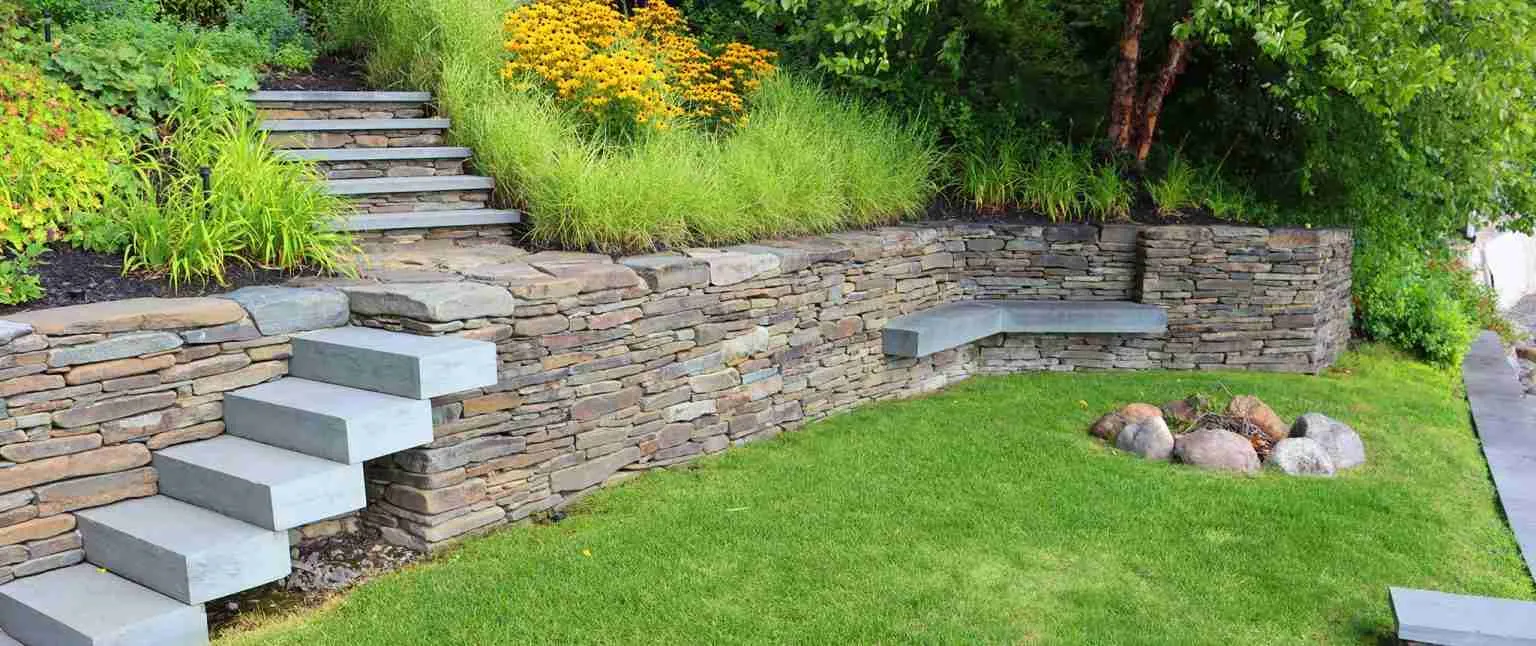
When choosing the right retaining wall for your landscape, two popular options stand out: block retaining walls and rock retaining walls. Both offer structural support, aesthetic appeal, and longevity, but which is better for your project? Let’s discuss their differences, benefits, and potential drawbacks to help you make an informed decision.
Understanding Retaining Walls
A retaining wall is more than just a decorative addition to your landscape; it serves a crucial function in preventing soil erosion, managing slopes, and enhancing outdoor spaces. The two primary types—block and rock retaining walls—have distinct characteristics that influence their durability, cost, and appearance.
Block Retaining Walls
Block retaining walls, also known as concrete block walls, are built using pre-manufactured concrete blocks designed to interlock and stack efficiently. They are commonly used for residential, commercial, and public projects due to their uniformity and strength.
Advantages of Block Retaining Walls
- Strength and Stability
Block retaining walls are engineered to withstand significant pressure from soil and water, making them an excellent choice for high-load areas. - Uniform and Modern Appearance
If you prefer a clean, contemporary look, block walls offer a polished and organized aesthetic compared to the rugged appearance of natural rock walls. - Easy Installation
Due to their interlocking design, block retaining walls are relatively easy to install compared to stacking irregularly shaped rocks. - Low Maintenance
Concrete blocks are resistant to weathering, pests, and rot, requiring minimal upkeep over time. - Customizable Designs
Available in various colors, textures, and finishes, block walls provide versatility for different landscape styles.
Concrete blocks are resistant to weathering, pests, and rot, requiring minimal upkeep over time. Many homeowners and businesses have trusted Rainier Rockeries for high-quality block retaining walls in Seattle WA, appreciating their durability and long-lasting performance.
Disadvantages of Block Retaining Walls
- Higher Cost
The upfront cost of materials and professional installation can be higher than using natural rock, though this may be offset by its durability. - Limited Natural Aesthetic
While they come in various textures, block walls do not offer the completely organic and natural look that rock retaining walls provide. - Engineering Requirements
For taller or load-bearing walls, professional engineering and proper drainage systems are necessary to prevent cracking or collapse.
Rock Retaining Walls
Rock retaining walls, often made from natural stone or boulders, provide a rustic, timeless appeal that blends well with natural landscapes. These walls can be built using dry-stacked (no mortar) or mortared stone techniques.
Advantages of Rock Retaining Walls
- Natural Aesthetic Appeal
Rock walls offer an earthy, organic look that enhances gardens, parks, and natural landscapes effortlessly. - Long-Lasting Durability
Natural stones, such as granite and limestone, are extremely durable and resistant to weathering over time. - Sustainability
If sourced locally, natural stone walls can be an environmentally friendly choice compared to manufactured concrete blocks. - Better Drainage
Since rock walls have natural gaps between stones, they allow water to drain more easily, reducing pressure buildup and minimizing the risk of damage. - Adaptability to Uneven Terrain
Unlike block walls that require a precise foundation, rock walls can be adjusted to fit irregular landscapes more easily.
Disadvantages of Rock Retaining Walls
- Labor-Intensive Installation
Since rocks come in irregular shapes and sizes, constructing a rock wall requires more time and effort to fit pieces together securely. - Potential for Movement
If not properly built, dry-stacked rock walls may shift over time, leading to stability issues, especially in areas prone to seismic activity. - Less Structural Engineering
While aesthetically pleasing, rock walls are less engineered compared to block walls, making them unsuitable for high-load applications. - Higher Long-Term Maintenance
Over time, individual stones may loosen or dislodge, requiring occasional adjustments and repairs.
Which One is Better for You?
Choosing between block and rock retaining walls depends on several factors, including your budget, aesthetic preference, terrain, and long-term maintenance expectations. Here’s a quick breakdown to help you decide:
| Feature | Block Retaining Walls | Rock Retaining Walls |
| Aesthetic | Modern and uniform | Natural and rustic |
| Durability | High | Very high (if built correctly) |
| Cost | Higher upfront | Lower material cost but high labor cost |
| Installation | Easier, interlocking design | Labor-intensive |
| Maintenance | Low maintenance | Requires occasional stone adjustments |
| Structural Strength | Excellent for high-load areas | Moderate to high, depending on the construction method |
| Drainage | Requires additional drainage | Naturally better drainage |
Final Thoughts
- If you need a retaining wall for heavy-duty applications, commercial spaces, or modern landscapes, block retaining walls are the better choice.
- If you prefer a natural, eco-friendly look that blends into the environment and you’re willing to invest more in installation, a rock retaining wall may be the way to go.
- If drainage is a primary concern, rock walls naturally provide better water flow, reducing hydrostatic pressure buildup.
No matter which option you choose, proper planning and professional installation can ensure that your retaining wall remains strong, functional, and visually appealing for years to come.
FAQs
1. Which type of retaining wall lasts longer?
Both block and rock retaining walls can last for decades when properly installed and maintained. Natural stone walls may last longer as they are less prone to cracking.
2. Can I build a retaining wall myself?
For small projects, DIY block or rock retaining walls are possible. However, for taller walls (over 3-4 feet), it’s best to hire a professional to ensure proper structural integrity.
3. Do retaining walls need drainage?
Yes, drainage is essential for both types. Block walls require built-in drainage pipes, while rock walls allow water to pass through naturally.
4. Are rock retaining walls cheaper than block walls?
Materials for rock walls can be cheaper if sourced locally, but the labor-intensive installation can make them more expensive overall.
5. How high can I build a retaining wall?
The height limit depends on local building codes. Generally, walls over 4 feet require professional engineering and permits.
6. Which retaining wall is best for a steep slope?
Block walls are generally better suited for steep slopes due to their engineered strength and stability.
7. Can plants grow in retaining walls?
Yes! You can incorporate creeping vines, succulents, or moss to soften the look of both block and rock walls.
By considering your specific landscape needs and long-term goals, you can select the best retaining wall that complements your outdoor space while providing essential structural support.
Apart from that, if you want to know more about 5 Key Benefits of Professional Irrigation Consultations then visit our Home Improvement category.
